coxoa:

ruinedchildhood:

[Retweet]

[Tweet from Kevin W, @ kwilli1046, saying, “seven year old girl shows friends her new prosthetic leg for first time and their reaction is beautiful.”

Video shows everyone running to greet her in the school’s playground. They look at the leg and think it’s really cool, give her hugs, run and walk with her, and treat her like the best thing in the area.

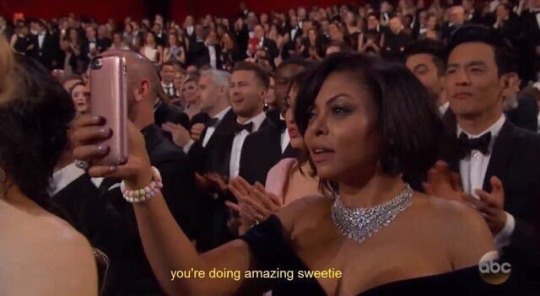
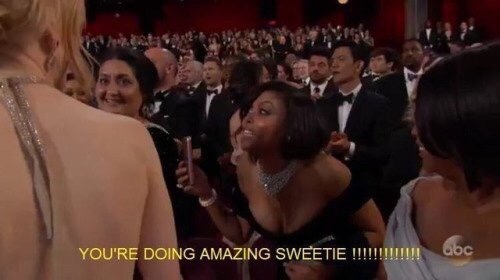
Reaction images show a lady holding up a phone to take videos and calling out, “you’re doing amazing sweetie. You’re doing amazing sweetie!!!!!!!!!!!!!”

End ID.]

ironspiderson:

Hot take but sign language should be taught in schools as a language option and all cinemas should provide subtitles on all their movie screenings

I’d suggest a 50/50 split for subtitled and non-subtitled screenings. I know too many people with reading disabilities or whose focus gets shot by words on the screen.

Accessibility and Convenience Are not the Same Thing

urbancripple:

A quick note to all my (amazing) able-bodied allies: be careful when talking about the “curb cut effect” in relation to how accessibility affects people. When you mention “prams, buggies, and bicycles” in the same breath as people with mobility aids, you’re conflating “accessibility” with “convenience”. 

When disabled people talk about accessibility, we’re talking about “equal access” not “ease of access”. When something isn’t accessible, we’re not mildly inconvenienced; we’re completely excluded. When the lift isn’t working, we can’t get to work. When public transportation isn’t accessible, we’re not troubled; we’re trapped.

This is why our most vocal supporters call themselves “disability rights activists” not “accessibility advocates”. It’s not about the benefits of accessibility; it’s about the direct, long-term harm a lack of accessibility causes.

Most folks don’t realize that the ADA is not a building code, but is in fact a civil rights law. So, the next time you’re explaining how important accessibility is to your able-bodied friends, don’t just focus on how accessibility makes the most common spaces better for everyone.

Focus on how a lack of accessibility excludes disabled people from even the most common spaces.

tuesdayisfordancing:

pervocracy:

I think I’m the only person on Tumblr who doesn’t like closed captions.  I mean, they’re fine if there’s a person in the room who needs them, but on my own I don’t turn them on.

Because the words appear slightly before the actors say them, and I read faster than actors generally talk, it’s like a micro-spoiler for me.  Or like listening to a soundtrack with an annoying echo.  It’s like:

Darth Vader: No, I

Caption: No, I am your father

Darth Vader: am your father

It’s just not my favorite way to experience things.

Also, they are not always placed well, and sometimes do block actor’s expressions or other important things.

Also I’m not really capable of listening to dialogue while reading it, or of ignoring the subtitles, so I actually miss things like tone, and even other visual things, because I couldn’t help reading and I can’t process and integrate/coordinate three streams of information at once.

Obviously I would not object if someone else needed subtitles, but they are distinctly suboptimal for me personally.

Yeah, I definitely get this.

I benefit from subtitles, but never use them if my Little Sister is around, unless it’s anime. Her learning disability makes reading them exhausting for her, and she can only do it if there are no distractions.

Similarly, my mama can’t follow the plot if there are subtitles on the screen.

Why Use Image Descriptions ?

owlsofstarlight:

There are many reasons and they all boil down to accessibility for everyone. It’s massively helpful for those of us who are disabled, and has the added benefit of being helpful for those who aren’t.

– Allows screen readers and verbal descriptions for the blind and visually impaired.

– Transcripts of videos that allow the deaf, hard of hearing, or those with audio processing problems to follow along by reading rather than or in conjunction with listening.

– Lets people know what the picture/screencap/video/gif is if it does not load or are on limited internet.

– Helps those with visual processing issues process the image.

– Gives autistics and people with problems reading facial expressions,emotions, and other non-verbal cues a helpful way to tell what’s going on in the picture/video/gif.

– Typed transcripts are often easier to read than screenshots (which are sometimes impossible to read).

– Audio transcripts are useful for people who can’t play sound from their device.

– Allows for blacklisting software to work more effectively. If an image description is included for a gif, picture, or screenshot then the words are already included in the body of the post and it is more likely to be screened by the software for people who need it.

Hey, game designers?

For accessibility reasons, do you think that you could maybe NOT make objects shake, vibrate, or flash?

Or if you need them to do that for more than a few seconds, maybe give an option to turn it off?

My ADD means I can’t filter out motion, and the headache from trying to process 30 vibrating entities on a screen is no fun.

Could people reblog?

How to add descriptive text to images in AO3

ao3commentoftheday:

I like to use images in my fanfic, but I didn’t think about screen readers. For people who need to use “text-to-speech” apps to read fanfic, these are wonderful tools that help them access our stories. Those tools can’t see images and describe them, though. It’s my responsibility as an author to make my fics accessible to anyone who wants to read them by adding those descriptions myself.

Find out how under the cut.

Keep reading

Penny for your thoughts: how do you represent a page break in your writing? There are so many deviations (—, ~@~, -+-, a horizontal line, etc) and I just find it interesting to find in fics. Personally, I use “-+-+-+-“, so what about you?

ao3commentoftheday:

goldenfalls:

ao3commentoftheday:

flootzavut:

ao3commentoftheday:

ao3commentoftheday:

When I posted on FFN I did a line of dashes ———–. I still do this in google docs sometimes. These days in AO3, though, I just use the horizontal rule:

What about the rest of you?

Screen readers are something I haven’t accounted for in some of my fics. On multiples occasions, I’ve added pictures that actually contain plot points (and one chapter is all pictures). I need to go back and make those chapters more accessible.

Also be aware that AO3 doesn’t include pictures if someone downloads the story – at least in my experience (downloading to Kindle in .mobi format).

If a story is allll pictures then I probably wouldn’t download it anyway, I’d just read it on the site, but sometimes if there’s an odd, plot-important picture, it can be a very confusing when there’s just a gap.

So yeah, if you include pictures in a story, it would definitely be a good idea to like… subtitle it in some way, especially if it’s relevant to the plot. Screenreaders and downloading are both affected by this.

[reblogs trimmed]

add this to the list of the many many things I didn’t know. I still haven’t figured out a workaround for my fics with photos, but I’m noodling on it in between work and the blog and the rest of life. If anyone has suggestions, I’m all ears 🙂

For screenreaders, you can use the attribute alt=“[image description]” in your img HTML tag, though that doesn’t do anything about the downloads.

hey, I’ll take that as solving at least ONE of my problems! Thanks!

Penny for your thoughts: how do you represent a page break in your writing? There are so many deviations (—, ~@~, -+-, a horizontal line, etc) and I just find it interesting to find in fics. Personally, I use “-+-+-+-“, so what about you?

ao3commentoftheday:

When I posted on FFN I did a line of dashes ———–. I still do this in google docs sometimes. These days in AO3, though, I just use the horizontal rule:

What about the rest of you?

I’ve heard that fancy separators made from characters can be annoying for blind readers. Screen readers tend to read each character individually.

If you want to take that into account, using only one type of symbol (many screen readers say ‘20 dashes’ instead of repeating ‘dash’ 20 times), or using the horizontal rule/line like ao3commentoftheday might be appreciated.

Personally, I find “-+-+-” really pretty, though. And tildes, “~~~,” with or without other characters. Tildes are the best!

actuallyblind:

ryanthedemiboy:

ryanthedemiboy:

For accessibility, please do not mix alphabets

Here is what the phrase “I ιovε fιoωεrs” sounds like with a screen reader (and then “I love flowers” normally).

Note: the phrase with all the Greek characters says “I love flowers” in English; the Greek letters used look like cuter versions of the Latin alphabet.

Uuuuuugh yes. I hate this. Like I fully understand that people aren’t going to stop doing it altogether but this is seriously not accessible in the slightest. Whenever I see posts that mix up a bunch of different alphabets like that for the #Aesthetic I literally have to skip right past them because I don’t know five alphabets and I’m not going to learn them to make sense of the post. So like just an FYI in case anyone was wondering, yeah, if you’re concerned about accessibility, don’t do that. It actually does sound like gibberish with a screen reader.

How do screen readers handle other languages? Would a word entirely in Greek or Arabic script be read as a word, or would it read out each character to you?

Or words written in IPA (the International Phonetic Alphabet, which precisely shows how each letter should be pronounced)?